
The Future for your Farm Starts Here
Friday, January 30, 2026
Reference: Sponsored Article
Maximizing a crop’s output may begin with high-yielding, disease-resistant varieties, but the team at FP Genetics believes that is just scratching the surface.
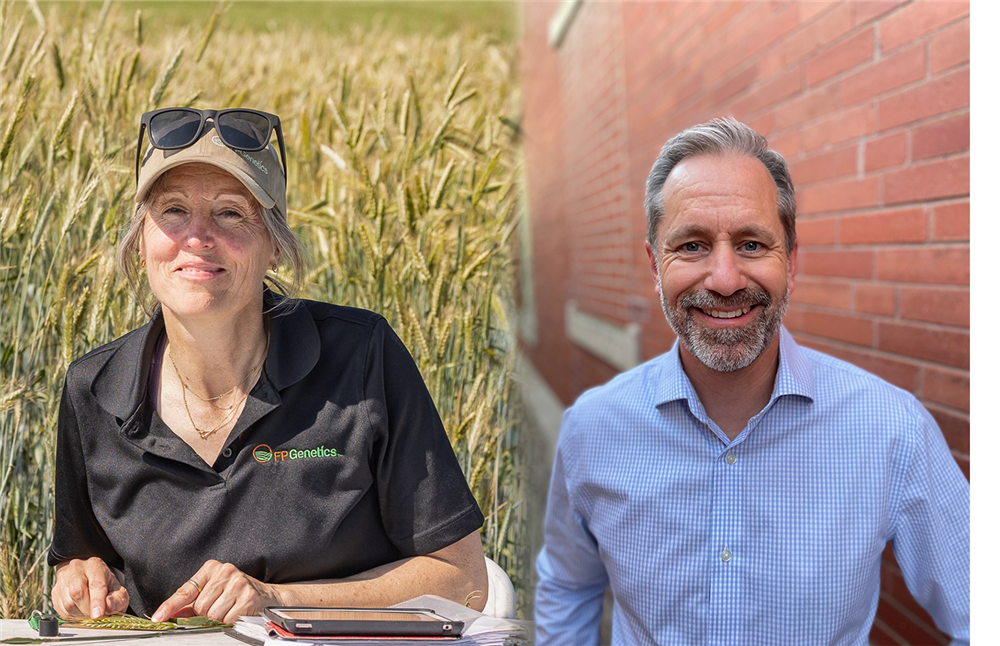
“It all begins with identifying the challenges our farmers face,” says Michelle Beaith, director of research and development at FP Genetics. “We work closely with our sales team, who engage directly with growers, gathering valuable feedback that shapes the direction of our research. This allows us to pinpoint the specific traits that matter most to those who depend on our products.”
As one of Canada’s largest seed growers and genetic developers, FP Genetics invests in variety development programs that focus on providing a continuous stream of innovative genetics to farmers across the Prairies.
Beaith guides the research and development team as they strive to deliver high-quality, precise products. She says that FP Genetics believes collaboration and sharing knowledge is the key to pinpointing the best traits, and in turn, providing the best varieties.
The best genetic traits for Canadian farmers
FP Genetics director of commercialization Nathan Penner says his goal is to ensure the best genetic traits from around the world are being evaluated and brought to Canadian farmers.
“FP Genetics is a strong supporter of Canadian breeding organizations, and most of our genetics come from these domestic institutions,” says Penner. “However, when local sources don’t address the challenges our farmers face, we expand that search to northern regions of the United States and Europe, which have similar climates to those in Canada.”
Using international genetic research allows the research and development team to access traits that help their varieties reach a higher ceiling.
“Once we’ve formed a clear direction, we dive into local and global pools of germplasm, searching for potential candidates,” says Beaith. “The most promising selections undergo rigorous adaptation trials where collaboration, precision, efficiency and foresight are key.”
Beaith notes that in 2024 alone, FP Genetics tested nine crop types – including cereals, pulses and corn – in 50 replicated trials across 20 locations in Western Canada.
“The process is demanding and complex,” she says. “It’s exhilarating pushing boundaries.”
The testing and modifying of each variety ensures they are not only suitable for Canadian conditions, but that they excel.
“Not all candidates make it through to market. We maintain very high standards for inclusion in our portfolio,” says Penner. “A new variety must offer improvement over what is currently available. Those that don’t meet our criteria are rejected. Those that do make the cut, represent significant victories for Canadian agriculture. These varieties are designed to help farmers maintain their competitive edge in an ever-evolving global marketplace.”
Attention to detail offers results
There are certain key components each variety must have to hit the market. The small details matter to FP Genetics because little things can make a big difference in the field.
“Yield is always a primary focus, but depending on the crop type, we also examine other critical factors such as days to flowering, days to maturity, lodging, height and disease resistance,” says Beaith.
“Living proof is our leading CWRS wheat variety AAC Hockley,” she says. “We wanted to introduce a high-yielding, short-stated variety with great standability, which this past year delivered exactly that.”
FP Genetics conducts trials at different sites across Western Canada, putting each variety to the test against different climates, conditions and soils to get an understanding of which genetics suit each situation.
As farmers know, growing conditions and results can vary from field to field. Beaith says FP Genetics provides a variety of options for growers to provide a tailored solution for each situation.
“Every decision, every trial, every data point matters, because we know our success is intrinsically linked to the success of our seed growers and commercial farmers,” says Beaith. “Our focus is on delivering niche solutions to address the unique challenges growers face.”
Beaith and Penner both hope that the company’s innovative and reliable genetics and varieties help growers thrive among the ever-changing conditions and markets.
“We must plan for potential problems and market shifts,” says Penner. “This proactive approach has us looking ahead to anticipate the needs of farmers eight to ten years in the future. We base our priorities on direct feedback from farmers, agronomists and researchers and regularly assess and realign our focus to develop crop varieties that benefit Canadian agriculture.”
“By continually seeking and developing superior varieties,” he says, “we ensure Canadian farmers remain at the forefront of global agriculture, ready to face the future and its challenges with confidence.”
“It all begins with identifying the challenges our farmers face,” says Michelle Beaith, director of research and development at FP Genetics. “We work closely with our sales team, who engage directly with growers, gathering valuable feedback that shapes the direction of our research. This allows us to pinpoint the specific traits that matter most to those who depend on our products.”
As one of Canada’s largest seed growers and genetic developers, FP Genetics invests in variety development programs that focus on providing a continuous stream of innovative genetics to farmers across the Prairies.
Beaith guides the research and development team as they strive to deliver high-quality, precise products. She says that FP Genetics believes collaboration and sharing knowledge is the key to pinpointing the best traits, and in turn, providing the best varieties.
The best genetic traits for Canadian farmers
FP Genetics director of commercialization Nathan Penner says his goal is to ensure the best genetic traits from around the world are being evaluated and brought to Canadian farmers.
“FP Genetics is a strong supporter of Canadian breeding organizations, and most of our genetics come from these domestic institutions,” says Penner. “However, when local sources don’t address the challenges our farmers face, we expand that search to northern regions of the United States and Europe, which have similar climates to those in Canada.”
Using international genetic research allows the research and development team to access traits that help their varieties reach a higher ceiling.
“Once we’ve formed a clear direction, we dive into local and global pools of germplasm, searching for potential candidates,” says Beaith. “The most promising selections undergo rigorous adaptation trials where collaboration, precision, efficiency and foresight are key.”
Beaith notes that in 2024 alone, FP Genetics tested nine crop types – including cereals, pulses and corn – in 50 replicated trials across 20 locations in Western Canada.
“The process is demanding and complex,” she says. “It’s exhilarating pushing boundaries.”
The testing and modifying of each variety ensures they are not only suitable for Canadian conditions, but that they excel.
“Not all candidates make it through to market. We maintain very high standards for inclusion in our portfolio,” says Penner. “A new variety must offer improvement over what is currently available. Those that don’t meet our criteria are rejected. Those that do make the cut, represent significant victories for Canadian agriculture. These varieties are designed to help farmers maintain their competitive edge in an ever-evolving global marketplace.”
Attention to detail offers results
There are certain key components each variety must have to hit the market. The small details matter to FP Genetics because little things can make a big difference in the field.
“Yield is always a primary focus, but depending on the crop type, we also examine other critical factors such as days to flowering, days to maturity, lodging, height and disease resistance,” says Beaith.
“Living proof is our leading CWRS wheat variety AAC Hockley,” she says. “We wanted to introduce a high-yielding, short-stated variety with great standability, which this past year delivered exactly that.”
FP Genetics conducts trials at different sites across Western Canada, putting each variety to the test against different climates, conditions and soils to get an understanding of which genetics suit each situation.
As farmers know, growing conditions and results can vary from field to field. Beaith says FP Genetics provides a variety of options for growers to provide a tailored solution for each situation.
“Every decision, every trial, every data point matters, because we know our success is intrinsically linked to the success of our seed growers and commercial farmers,” says Beaith. “Our focus is on delivering niche solutions to address the unique challenges growers face.”
Beaith and Penner both hope that the company’s innovative and reliable genetics and varieties help growers thrive among the ever-changing conditions and markets.
“We must plan for potential problems and market shifts,” says Penner. “This proactive approach has us looking ahead to anticipate the needs of farmers eight to ten years in the future. We base our priorities on direct feedback from farmers, agronomists and researchers and regularly assess and realign our focus to develop crop varieties that benefit Canadian agriculture.”
“By continually seeking and developing superior varieties,” he says, “we ensure Canadian farmers remain at the forefront of global agriculture, ready to face the future and its challenges with confidence.”
For more information visit |
 |