Ten Kids. One Farm. And a Succession Plan They Were Told Was Impossible.
Tuesday, September 8, 2026
Reference: Sponsored Article

A Saskatchewan farm family spent years searching for a way to keep the farm together while treating ten children fairly. But fair isn’t always equal. Without the hard conversations, Nathan Kuhn says, “you’re going to be another orange sign on the side of the highway.”
When Nathan Kuhn’s family first started looking seriously at farm succession, they had a problem that was anything but simple.
There were ten children.
Nathan, the eldest, is a fourth-generation farmer in west-central Saskatchewan. Three sons were actively farming, while the others had varying levels of involvement. Eight of the ten children work in agriculture in some form. It’s in their blood, and it defines the family.
Everyone wanted the farm to continue for generations, but they also knew the basic math was a problem. If you divided the “farm pie” into ten equal pieces, there might not be much of a farm left when it was done. In fact, they knew it would doom their legacy and end their family farm.
Nathan remembers his father asking one large and well-known transition planning firm a straightforward question: How do you create a succession plan when three children farm and seven don’t?
The answer was devastating.
“You can’t,” they told Nathan and his father. “It’s never been done.”
Nathan was devastated. But he didn’t give up, determined to follow his father’s wishes the they find a solution that kept the family together, but also kept the farm in their hands.
“The first person that built a house, I guarantee everybody said you can’t build a house out of wood, and now we all live in wooden houses.”
So the family kept looking over the years that followed.
Nathan’s father had been pushing them to think seriously about succession since around 2015. He had watched other farm families struggle and sometimes fall apart.
“He witnessed a lot of farm families fail over his time,” Nathan says. The Kuhns didn’t want to be one of them.
But that did not mean the conversations were easy. With ten children, there were different personalities, priorities and strong opinions around the table.
“We’re stubborn and strong, and often walk away from each other in a conversation. But we always cool down and come back.”
For years, that was the pattern. They would come up with an idea, hit another roadblock, put the whole thing aside and eventually start again.
By the time Derryn Shrosbree and his Farmstrong team became involved, Nathan estimates they were only about 10 per cent of the way toward a real succession plan.
Then things started moving.
“He was really good at taking away the hurdles we intentionally put in front of ourselves,” Nathan says. “Derryn would put up his hand and say, ‘I have a solution,’ and away you’d go.”
One of the biggest breakthroughs came when the family realized they had been making too many assumptions about what the seven off-farm children actually wanted.
At Derryn’s urging, Nathan’s father finally asked each of them a very simple question: “What do you expect?”
The answers surprised everyone. Their assumptions about each other were mostly wrong.
“You have to ask kids what they want,” Shrosbree says.
In the Kuhn’s case, no one came forward demanding one-tenth of the land.
That changed the conversation. The family stopped focusing on how to divide everything equally and started focusing on what they actually wanted to protect.
When Shrosbree asked Nathan, his brothers and their parents to name their number one priority, the answer was the same.
Keep the farm together.
They chose legacy.
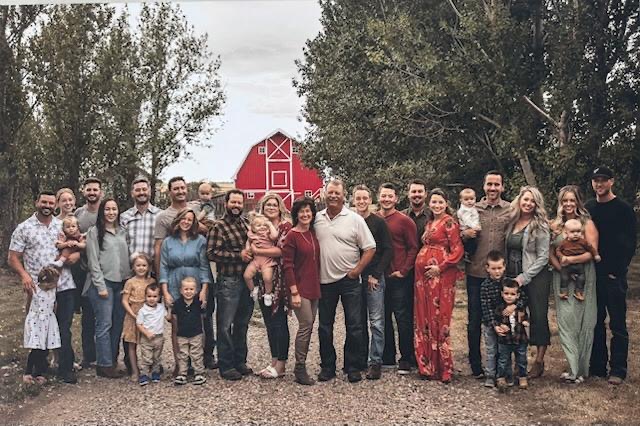
“The goal is never to sell that business,” Nathan says. “It’s to pass it on to either my children, my nieces and nephews, to continue a legacy.”
But he was equally clear about the seven off-farm children, saying “zero is not being fair either.”
Farmstrong developed a strategy using leveraged life insurance and off-farm real estate. The goal is to create real value for the non-farming children without forcing the family to sell or carve up productive farmland.
In simple terms, instead of cutting one pie into ten pieces, the family is building another pie.
“So far it’s working exactly to plan, which was probably the most surprising part about the whole thing,” Nathan says with confidence.
There were also some lighter moments along the way.
During early virtual meetings, several family members joined from the same computer. It did not work very well, especially for those who were less comfortable speaking up.
So they started going into separate rooms and joining from separate computers.
“We’re in the same house!” Nathan laughs. But just that simple exercise of being in a different room allowed the individual children to speak their minds freely.
It sounds ridiculous, but it worked. Everyone had their own space, their own voice and a better chance to be heard.
For Nathan, that may be the biggest lesson in all of this. Succession is not just about land, insurance, tax or legal structures. It is about getting people to talk honestly while there is still time to do something.
“This is more than a business,” Nathan says. “This is our lifestyle. This is my family’s lifestyle and it’s not something that is that liquid. It’s something we wanna see go on.”
His advice to other farm families is simple: start talking.
Otherwise, he says, “you’re going to be another orange sign on the side of the highway.”
Shrosbree puts it another way.
“Choose your hard.”
“The choice is have a conversation or have no conversation,” he says. “There are options out there. And 99.9 per cent of the time there is a mathematical solution. So chat soon, and chat often.”
Ten children made the Kuhn family’s situation unusually complicated.
It did not make it impossible.
Both Derryn and Nathan advise other farm families to never let anyone tell you otherwise.