
Keeping the Family Farm Legacy Alive: Navigating the Future of Your Farm
Monday, September 7, 2026
Reference: Sponsored Article

For generations, Ontario farms have been more than businesses. They represent family history, hard work, sacrifice, and a deep connection to the land. Many farm owners spend their entire lives building an operation with the hope that one day it will be passed on to the next generation.
But what happens when there isn't a family member ready or willing to take over?
It's a question more farm families are facing today, and one that requires careful planning, honest conversations, and professional guidance.
As a REALTOR® specializing in rural and agricultural properties throughout Eastern Ontario, I work closely with farm families who are navigating retirement, succession planning, and major life transitions. My goal is to help them understand their options, protect the value of their investment, and make informed decisions about the future.
The Growing Succession Challenge
One of the most significant issues facing Ontario agriculture today is farm succession.Many farm operators are approaching retirement age, while younger generations are pursuing careers outside agriculture. In other cases, the financial investment required to continue farming has become a significant barrier for the next generation.
As a result, many farm owners are finding themselves without a clear succession plan.
This can create uncertainty, but it also presents an opportunity to explore solutions that support both the family's financial future and the legacy of the farm.
The Ontario Farmland Market: What Farm Families Need to Know
Ontario's farmland market has remained remarkably resilient despite economic uncertainty and changing interest rates.Over the past several years, farmland values increased significantly across much of the province. While the pace of growth has moderated, quality agricultural land continues to be in strong demand.
Several factors continue to support farmland values:
- Limited supply of available farmland
- Strong long-term demand for food production
- Continued farm expansion by existing operators
- Interest from agricultural investors
- Population growth and development pressures in some regions
In Eastern Ontario, many buyers are attracted by opportunities to expand operations, while others are seeking productive land at values that may be more affordable than some areas of Southwestern Ontario.
While buyers are becoming more cautious due to borrowing costs, well-maintained farms with productive soils, good drainage, quality buildings, and strong operational potential continue to attract interest.
Who Is Buying Farmland Today?
Many people assume investors are purchasing all available farmland, but the reality is more balanced.Today's buyers often include:
- Local farm families looking to expand
- Next-generation farmers growing their operations
- Livestock producers seeking additional acreage
- Cash crop operators
- Agricultural investment groups
- Rural lifestyle buyers seeking acreage properties
The buyer pool varies significantly depending on the size, location, and type of farm being offered for sale.
Understanding who is most likely to purchase a specific farm is critical when developing an effective marketing strategy.
What Is Motivating Sellers?
The primary reasons Ontario farm owners choose to sell include:- Retirement
- Lack of a successor
- Estate planning
- Family restructuring
- Debt reduction
- Strategic business decisions
For many families, the decision is not driven by financial hardship but rather by the reality that there is no next generation prepared to continue operating the farm.
These situations require thoughtful planning and a clear understanding of available options.
Selling the Farm Doesn't Mean Losing the Legacy
Many owners feel that selling the farm means ending the family legacy.In reality, selling can often be the responsible decision that preserves the value of decades of hard work and provides financial security for retirement.
In many cases, farms are purchased by other agricultural families who continue farming the land and carrying forward its agricultural purpose.
The legacy remains alive through the stewardship of the land and the opportunities it creates for future generations.
Understanding Your Farm's True Market Value
Before making any decisions, it is essential to understand what your farm is worth in today's market.Unlike residential properties, farm values are influenced by numerous factors including:
- Acreage
- Soil classifications
- Tile drainage
- Crop productivity
- Livestock facilities
- Outbuildings
- Residential dwellings
- Water sources
- Road access
- Zoning
- Development potential
- Local market conditions
Every farm is unique, and accurate pricing requires specialized agricultural knowledge.
The Importance of a Comprehensive Comparable Market Analysis
One of the most valuable services I provide is a detailed Comparable Market Analysis (CMA).This goes far beyond simply looking at acreage values.
A thorough CMA evaluates:
- Recent farm sales in the area
- Current competing listings
- Regional agricultural trends
- Soil and productivity comparisons
- Building values
- Income-generating potential
- Property-specific strengths and weaknesses
- This information helps farm owners understand the current market and establish a pricing strategy designed to maximize value.
Exploring All Options Before Selling
When there is no obvious successor, selling is not always the only option.I often encourage families to explore alternatives such as:
- Leasing farmland
- Share-cropping arrangements
- Partnerships
- Partial farm sales
- Gradual transition strategies
- Estate planning solutions
By understanding all available options, families can make decisions that align with their financial goals and personal values.
Marketing Agricultural Properties Effectively
Selling a farm requires a very different approach than selling a residential property.Successful farm marketing may include:
- Professional photography
- Drone imagery and video
- Detailed property information packages
- Agricultural industry networking
- Targeted digital marketing
- Social media promotion
- Direct outreach to qualified buyers
The objective is to expose the property to the largest pool of serious purchasers while highlighting the unique features that contribute to its value.
Looking Ahead: The Future of Ontario Farmland
Looking forward, the fundamentals supporting Ontario farmland remain strong.While the dramatic price increases experienced in previous years may moderate, farmland continues to be viewed as a valuable long-term asset.
Demand for productive land remains steady, available inventory remains limited, and many farm operators continue seeking opportunities to expand.
For farm families considering retirement or succession planning, now is an excellent time to begin evaluating options and preparing for the future.
How I Help Farm Families Through the Transition
Selling a farm is rarely just a real estate transaction.It is often one of the most significant decisions a family will ever make.
My role is to provide more than marketing and negotiations. I help farm owners:
- Understand their options
- Evaluate succession challenges
- Determine market value
- Complete a comprehensive farm evaluation
- Review comparable sales data
- Develop a strategic marketing plan
- Coordinate with legal and financial professionals
- Navigate the emotional aspects of the transition
Every farm has a story. Every family has unique goals.
My commitment is to provide honest advice, expert market knowledge, and professional guidance that helps farm families make confident decisions about the future.
Start the Conversation Early
Whether retirement is two years away or ten, planning ahead creates more opportunities and better outcomes.If you're wondering what your farm is worth, exploring succession options, or considering a future sale, the first step is simply gathering information.
A confidential conversation and professional farm evaluation can help you understand your options and begin planning for the next chapter while protecting the legacy you've worked so hard to build.
Connect with Cathy Hay to Learn More and for all your
Real Estate needs
Real Estate needs

📞Phone: (613) 851-0954
📧Email: cathyhaysells@gmail.com
🌐Website: https://www.realtyexecutives.com/agents/catherine-hay
 Farm Marketer Profile: https://www.farmmarketer.com/cathy-hay
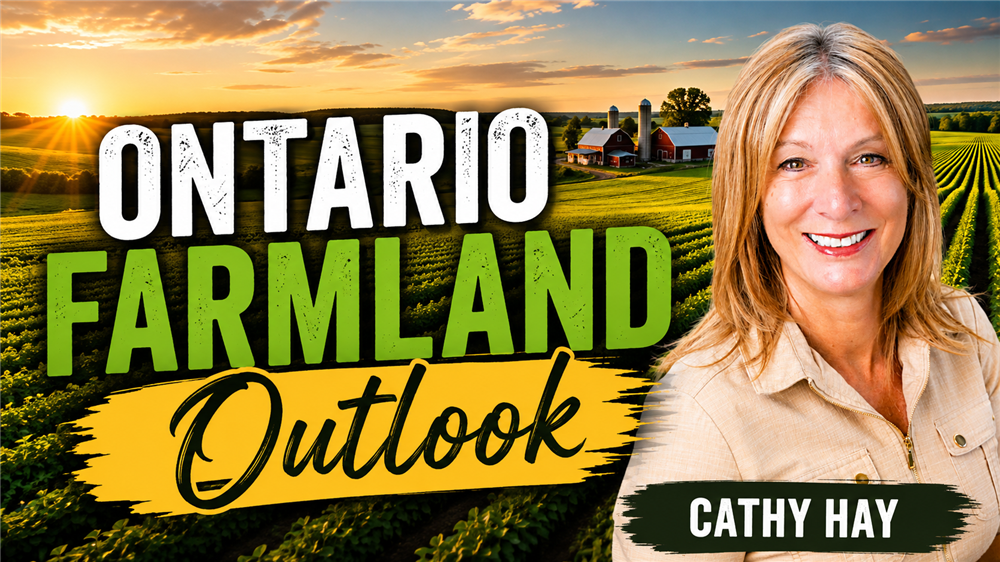
Watch my episode on The Impact Farming Show, where I talk with Tracy Brunet about the Ontario farmland market, current land values, farm succession, and preserving family legacies for future generations.
https://www.farmmarketer.com/Resources/ResourceItem?resourceItemId=640