
Hybrid Fall Rye Provides Flexibility and Nutritional Quality for Beef and Dairy Producers
Friday, March 13, 2026
Reference: Sponsored Article

Hybrid Fall Rye Provides Flexibility and Nutritional Quality
for Beef and Dairy Producers
written by Laura Eastwood, Ph.D. | Animal Nutrition Manager | KWS Seeds Canada
When it comes to feeding cattle, nutritionists and producers look for feed ingredients that can provide several key elements to their feeding programs. Excellent nutritional quality and price are top of mind for everyone. However, there are other factors that can influence which feed ingredients are selected by a farm, including crop yield, consistency of quality, flexibility in end use and benefi ts to overall farm management practices.
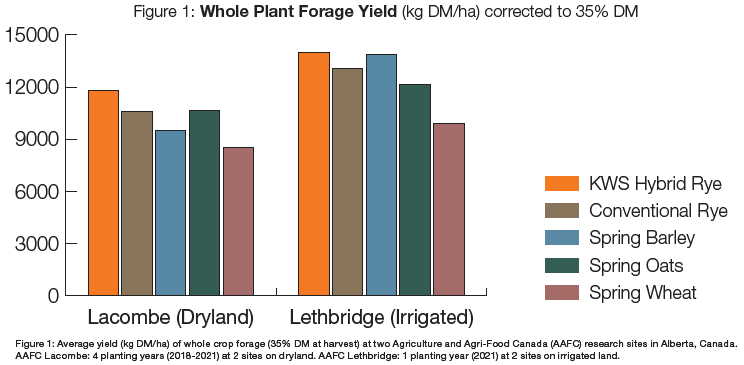
KWS Hybrid Rye, a relatively new crop to North America, checks off many of these boxes, delivering a strong feeding program for cattle. KWS Hybrid Rye is a fall seeded, winter-hardy crop that provides seeding and harvest flexibility, along with risk management on farm. KWS Hybrid Rye brings 30+ years of breeding research and advancement from Europe to the North American market, meaning a 20–40% yield increase over conventional rye grain and a 10–30% yield increase over wheat grain. As a forage, yields can be 40% higher than spring wheat, 25% higher than spring barley and 20% over conventional rye. For a livestock producer, this means feeding more animals per acre, or an acre of feed lasting longer! In addition to higher yields, KWS genetics provides improved disease resistance, lower susceptibility to mycotoxins like fusarium and ergot, excellent consistency in yield and quality year over year and better cold tolerance relative to other small cereal grains.
As a bonus, Hybrid Rye has a massive, allelopathic root system. This means it can source nitrogen and water from deeper in the soil, it also provides competition against weeds (thus reducing pesticide applications), is drought resistant, and breaks up the soil hardpan to improve soil tilth. And, because it is a fall seeded crop, it provides soil cover during the winter to protect soil from erosion and helps spread out the timing of workloads on the farm. Overall, the features of KWS Hybrid Rye as a fall seeded forage or grain crop reduces on-farm risk associated with drought, poor growing conditions, and inclement weather.
Hybrid Rye Forage
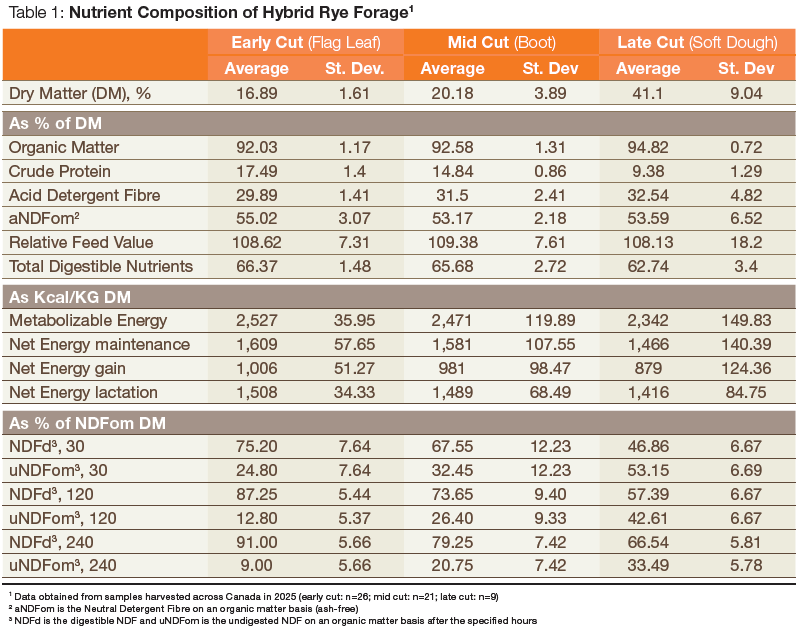
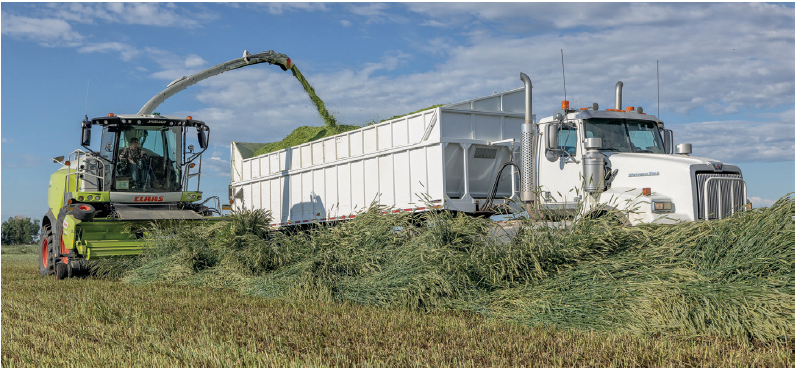
The KWS variety portfolio includes both dual purpose and forage varieties which are designed to maximize biomass yield and quality. Similar to other forages, cutting early at the flag leaf or boot stage will produce nutrient dense, highly digestible cattle feed perfect for those requiring a nutrient packed ration. Cutting late at the milk or soft dough stage will produce a forage higher in fibre with lower energy and nutrient density. Hybrid Rye inclusion levels will vary depending on the animal being fed and the goals of the farm, but can included at 30% DM of the forage portion of the ration successfully. With the flexibility in harvest timing, Hybrid Rye works well for both dairy and beef cattle systems.Hybrid Rye makes an excellent green feed or silage, but it can also be grazed in the fall, spring or after harvest if additional pasture is needed on farm. And, with dual purpose varieties, a farmer can opt to take the crop for grain instead of forage if the need arises, again adding flexibility and risk-management to the producer. Table 1 shows the average nutrient content of early, mid and late cut KWS Hybrid Rye.
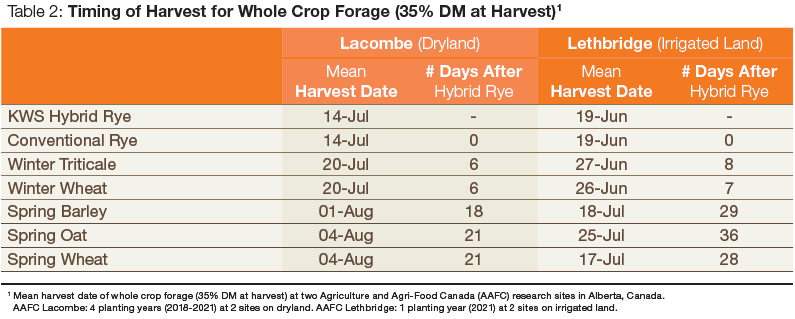
Planting Hybrid Rye at the right seeding rate, at the proper depth and into a well-prepared field will set the crop up well leading into winter (work with your Hybrid Rye supplier to determine the best practices for your farm). Figure 1 shows the average yield data from whole crop forage harvest (35% DM at harvest) at southern and central Alberta research farms (dryland and irrigated land) over several years. In addition to the high yields, Hybrid Rye matures earlier than other cereal crops because it comes out of dormancy at a lower temperature, can utilize winter field moisture, and can make use of cooler temperatures during the growing season. This means that Hybrid Rye forage is ready for harvest much sooner than other cereal forages, helping to spread out workload and risk on farm. In some geographic regions, Hybrid Rye allows for double cropping due to this early spring growth. Southern Alberta and Southwestern Ontario are examples of this, where forage can be harvested early, and a secondary cash crop or green feed crop can be planted after. In southern Alberta, Hybrid Rye is ready for harvest 1 week earlier than other winter cereals, and a month earlier than spring cereals like barley, oats or wheat (Table 2). For many cattle producers, this is a key feature of Hybrid Rye, allowing them to maximize total fi eld production throughout the year by planting a secondary crop. Whether you are looking for high nutritional quality, high biomass production, workload flexibility or risk management on farm, Hybrid Rye forage checks all of those boxes and can be adopted as an excellent feed source for both dairy and beef cattle in North America.
Hybrid Rye Grain
Hybrid Rye grain is a high-quality feedstuff for cattle and can be included successfully into beef and dairy cattle diets. It has a well-balanced nutrient profile when compared to other common cereal grains used to feed cattle in North America such as corn, wheat, and barley. Hybrid Rye has similar total digestible nutrients and higher net energy values. The crude protein content is higher than corn, similar to barley and lower than hard wheat varieties. The higher fibre content of Hybrid Rye can help promote a healthy rumen, as a large portion of the fibre fraction is soluble fibre. Table 3 shows the nutritional composition of KWS Hybrid Rye grain for cattle.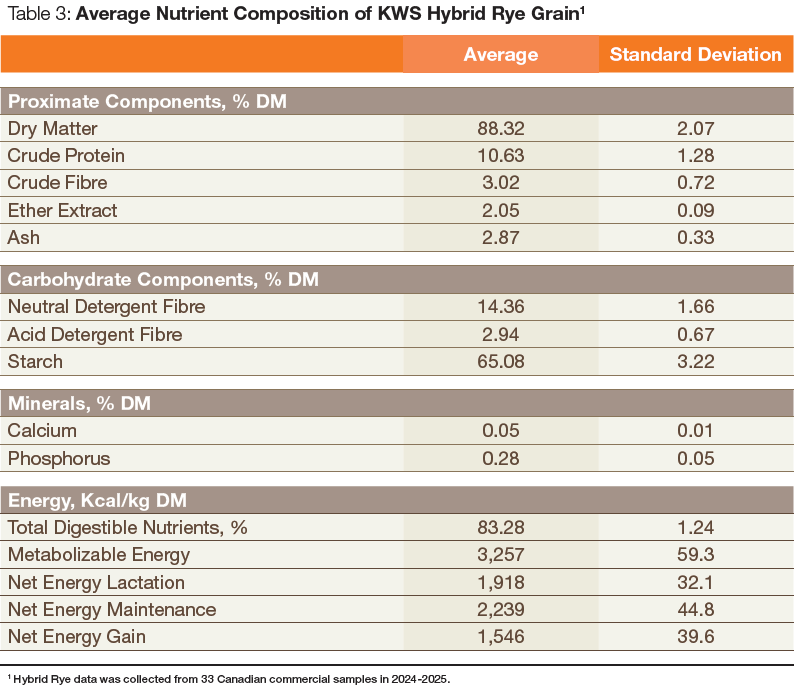
Research has shown that Hybrid Rye can successfully replace a portion of a barley-based grain ration, or a corn-based one without impacting the performance of the animals. For both dairy cattle and feedlot steers, up to 30% of the grain portion of the ration can be replaced with Hybrid Rye. The grain can be processed by steam flaking, rolling or tempering, but take care not to over-process due to a high level of rapidly degradable starch. A course processing index and blended ration with slow starch degrading grains (e.g. peas or corn) will help provide a well balanced diet.
Early pollination and KWS PollenPLUS™ technology mean that KWS Hybrid Rye is less susceptible to fusarium and ergot contamination compared to other cereal grains and conventional rye. However, it is best practice to have a full mycotoxin panel run on any feed grain before feeding to livestock. If mycotoxins are present in any of your grain varieties, work with your nutritionist to manage feeding levels to ensure there are no impacts to animal health and performance.
Summary
KWS Hybrid Rye provides flexibility to your cattle operation in terms of farm management, risk management and nutritional options. Seeding a winter hardy, fall crop can shift the workload on your farm, protect soils throughout the winter months, and help mitigate risks by adding another crop to your toolbox on farm. From a nutritional perspective, Hybrid Rye can be used as a forage or grain for cattle feeding and works well for beef and dairy producers.Hybrid Rye forage can be harvested early to maximize nutrient density and digestibility, while allowing for double cropping in some geographies. It can also be cut later to maximize biomass production and provide a lower energy feed if needed. As a grain, Hybrid Rye out yields any other small cereal crop meaning you can feed more animals per acre, with a well-balanced feed source. For beef and dairy cattle, you can include levels up to 30% of the grain portion of the ration successfully, without impacting performance.
KWS Hybrid Rye is less susceptible to common small grain diseases, including mycotoxins such as fusarium and ergot, making it an ideal choice for livestock feed. With a choice of forage or dual-purpose varieties, there is a Hybrid Rye that will fit on your farm, providing you with flexibility, quality and consistency.
For more information, visit KWS Seeds Canada online (www.kws.com/ca) to find a retailer near you or speak to a team member.

Laura Eastwood, Ph.D.
Animal Nutrition Manager
368.999.1790
laura.eastwood@kws.com